
Mini dental implants have become an increasingly searched topic — and for good reason. They offer a smaller, often less invasive, and less expensive alternative to traditional implants for certain patients and applications. But they're not right for everyone. At Fusion Dental Implants, we believe every patient deserves a clear, honest explanation of all their options — including mini implants. Here's what you need to know.
What Are Mini Dental Implants?
Mini dental implants (MDIs) are dental implants with a diameter of less than 3mm — compared to standard implants which typically range from 3.5mm to 6mm in diameter. Their smaller size is the defining characteristic, and it drives most of the differences in how they're used, how they're placed, and who benefits from them.
Mini implants are a single-piece design (the post and abutment are one unit), while standard implants are two-piece (post and abutment are separate components that connect). This simplifies placement but also limits some of the prosthetic options available.

What Are Mini Implants Used For?
Stabilizing Loose Dentures
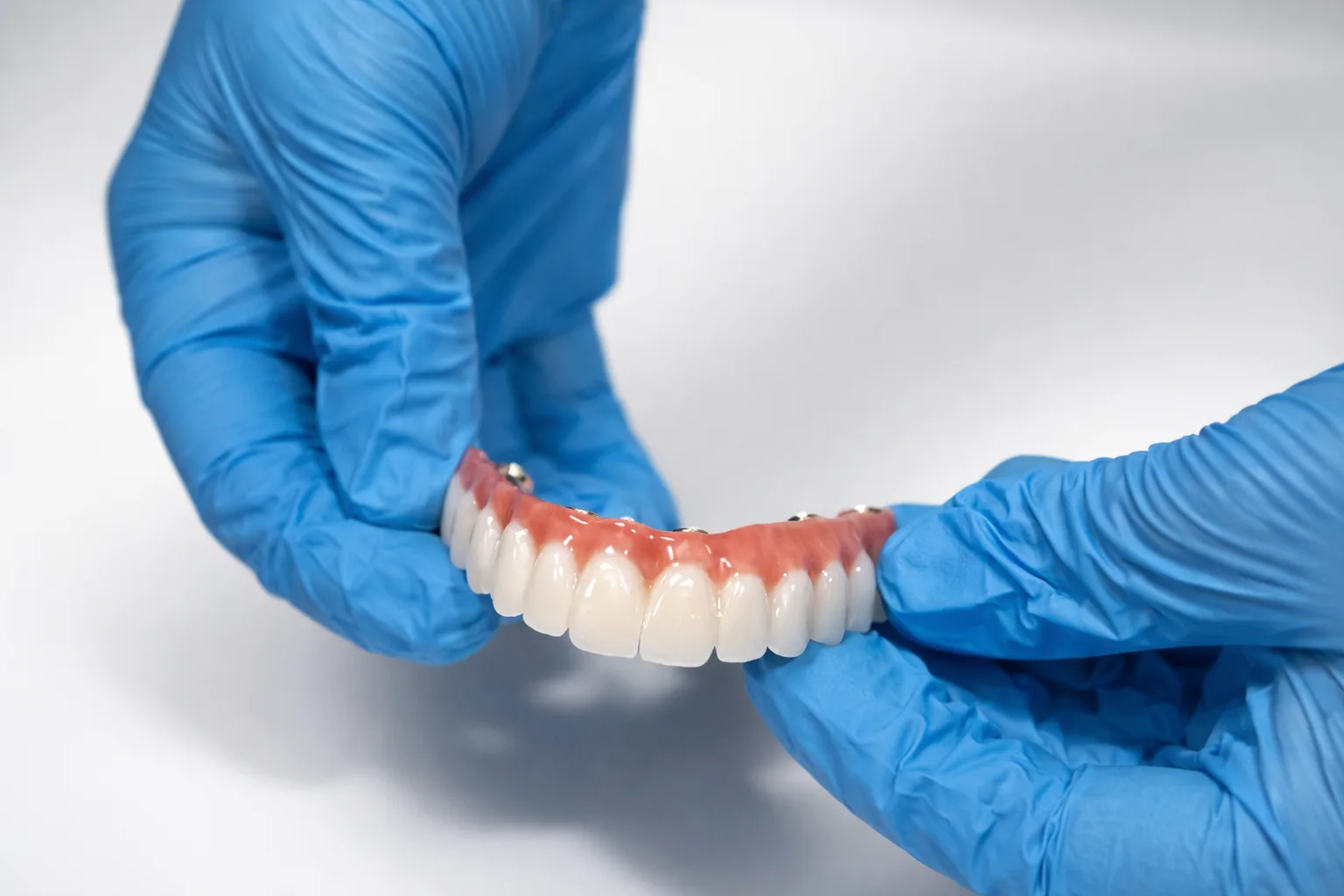
This is the most common and well-documented application for mini implants. Two to four mini implants placed in the lower jaw can anchor a lower denture, eliminating the shifting, clicking, and discomfort that makes traditional lower dentures so frustrating for millions of patients.
The denture snaps onto the implants using ball-and-socket attachments, providing dramatically improved stability compared to a free-floating denture — at a lower cost than a full implant-supported overdenture system.
Replacing Small or Narrow Teeth
In areas of the mouth where the bone is naturally narrow — particularly the lower front teeth — mini implants can replace individual teeth where a standard implant wouldn't fit without significant bone augmentation.
Temporary Anchorage (Orthodontic Purposes)
Mini implants are also used in orthodontics as temporary anchorage devices — providing a fixed point that braces or aligners can use to move teeth in ways that weren't previously possible. These are typically removed after orthodontic treatment is complete.
Mini Implants vs. Standard Implants: Key Differences
| Standard Implants | Mini Implants ---|---|--- Diameter | 3.5mm – 6mm | Less than 3mm Design | Two-piece | One-piece Bone requirement | More bone needed | Can work with less bone Bone grafting | May be required | Often not needed Applications | Single teeth, bridges, full arch | Denture stabilization, narrow sites Load capacity | Higher (better for back teeth) | Lower (less suitable for heavy chewing) Procedure complexity | More involved | Less invasive in many cases Cost | Higher | Lower Long-term data | 40+ years | 10–15 years
Who Is a Good Candidate for Mini Implants?
Mini implants may be a strong option for patients who:
- Have insufficient bone for standard implants and prefer to avoid bone grafting
- Are primarily seeking denture stabilization (especially lower dentures)
- Are missing small teeth in narrow bone areas
- Have health conditions that make more complex surgery inadvisable
- Are on a tighter budget and need a more affordable implant solution
- Are elderly patients for whom a less invasive procedure is preferable
Who Is NOT the Best Candidate for Mini Implants?
Mini implants are not typically recommended as the primary solution for:
- Replacing back teeth (molars, premolars) where bite forces are highest — the smaller diameter can make them more susceptible to failure under heavy chewing loads
- Full arch restorations for patients who qualify for standard All-on-4 or All-on-X
- Patients who want a traditional crown on a single implant post (the one-piece design limits crown options)
- Patients with very poor bone quality, where even mini implants may not achieve adequate anchorage
How Are Mini Implants Placed?
One of the advantages of mini implants is that placement is often less invasive than standard implants. In many cases, mini implants can be placed through a minimally invasive protocol — a small pilot hole through the gum tissue, with the implant screwed into position without large incisions or sutures.
This means less surgical trauma, less post-operative discomfort, and faster healing for many patients. In some cases, the entire procedure — placement and denture attachment — can be completed in a single appointment.
How Much Do Mini Implants Cost?
Mini implants are significantly less expensive than standard implants, primarily because they require less material, fewer components, less time in surgery, and often no bone grafting.
In the greater Sacramento and Roseville region:
- Mini implants for denture stabilization (2 implants): $3,000 – $5,000 total
- Mini implants for denture stabilization (4 implants): $5,000 – $8,000 total
- Individual mini implant + crown: $2,000 – $3,500
Compare this to standard implant-supported overdentures, which typically run $12,000–$20,000 per arch.
The Bottom Line on Mini Implants
Mini implants are a legitimate, clinically documented option for the right patient in the right application. They are not a "budget compromise" for patients who should really have standard implants — they are a genuinely appropriate solution for specific clinical situations.
At Fusion Dental Implants, we discuss mini implants as part of a complete conversation about your options. If they're right for you, we'll recommend them. If standard implants are a better fit, we'll explain why.
Fusion Dental Implants | Roseville & El Dorado Hills, CA (916) 292-9998 | fusiondentalimplants.com
Frequently Asked Questions
What are mini dental implants?
Mini dental implants are smaller-diameter implants (under 3mm) used primarily to stabilize dentures or replace small teeth in narrow bone areas. They are less invasive, less expensive, and require less bone than standard implants.
Are mini implants as good as regular implants?
For the right application — particularly denture stabilization — mini implants perform very well. For replacing individual back teeth or supporting full arch restorations, standard implants are typically preferred due to their higher load capacity.
How much do mini dental implants cost near Sacramento?
Mini implants for denture stabilization in the Sacramento region typically cost $3,000–$8,000 depending on the number of implants. Call Fusion Dental Implants at (916) 292-9998 for a personalized estimate.
Can I get mini implants if I don't have enough bone for regular implants?
Possibly. Mini implants require less bone than standard implants. A 3D imaging evaluation at Fusion Dental Implants will determine whether mini or standard implants — or a technique like All-on-4 — is the right fit for your situation.
Ready to Transform Your Smile?
Schedule your free consultation today and discover how dental implants can change your life.