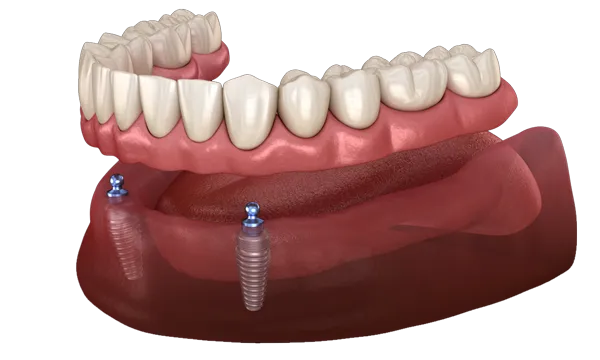
Snap-in dentures, clinically called implant-retained overdentures, are removable dentures that click onto 2 to 4 dental implants instead of relying on suction or adhesive. At Fusion Dental Implants' El Dorado Hills office, snap-in systems start at $9,999 per arch, and treatment begins with a free consultation that includes a 3D CT scan — so you know exactly what your jaw can support before you commit to anything.
If you already wear traditional dentures, you know the routine this replaces: choosing "safe" foods off a menu, packing adhesive for a night out, feeling the lower plate lift when you laugh. A snap-in denture ends that negotiation. It stays anchored while you eat and speak, then comes out at night for easy cleaning.
This guide covers what makes the snap-in approach different, what it costs locally, how it compares with fixed All-on-4 bridges, and what the process looks like when you start here in El Dorado Hills. For the full clinical deep-dive on how these systems work, see our complete snap-in dentures guide.
Why traditional dentures keep getting worse
Traditional dentures rest on the gums and rely on suction, which is rarely enough — especially in the lower jaw, where the tongue and cheeks constantly work against the plate. The result is slipping, clicking during speech, and sore spots from friction.
The deeper problem is invisible. Without tooth roots, the jawbone loses the stimulation it needs and gradually shrinks — a process called resorption. That is why dentures that fit well in year one feel loose by year five, and why long-term denture wearers develop the sunken facial look. According to the FDA's overview of dental implants, implants that fuse with the jawbone provide the root-like stimulation that helps preserve it.
Snap-in dentures solve both problems at once: the implants anchor the denture so it cannot slip, and they keep the bone working so your fit and facial structure hold up over time.
How the snap-in mechanism works
Each implant is topped with a small locator attachment — a medical-grade connector that mates with a matching housing inside your denture. Seating the denture produces a distinct click that tells you it is locked. There is no paste, no powder, and no guessing whether it will hold through a meal.
Two configurations are common:
- Stud (locator) systems — individual attachments on each implant; the simplest and most widely used design.
- Bar-retained systems — a thin custom bar connects the implants and the denture clips onto the bar; sometimes chosen when implants need to share load in softer bone.
Both give you stability during the day and easy removal at night. Which one suits your jaw is determined during planning, not guessed at the chair.
Snap-in dentures vs. fixed All-on-4: which fits your lifestyle?
Both options anchor your teeth to implants, and both are dramatically more stable than a traditional plate. The core difference is removability — and what that means for cleaning, cost, and how the teeth feel day to day.
Choose the snap-in route if you want implant-level stability at a lower entry cost, prefer cleaning the prosthetic in your hand, or have bone loss that makes a fixed bridge harder to support without bone grafting. Lean toward fixed full-arch implants if you want teeth that never leave your mouth — our hybrid denture vs. fixed bridge comparison covers that decision in depth.
The process at our El Dorado Hills office
The path at a glance: Free Consultation + 3D CT Scan → Implant Placement → Healing with Temporary Teeth → Final Snap-In Denture
Step 1: Consultation and 3D planning
Your first visit includes a 3D CT scan at no charge. The scan maps your bone density, nerve positions, and sinus anatomy in three dimensions, letting the surgical team plan exactly where each implant should go — and confirming whether you can skip grafting. Learn more about how this works in our 3D imaging guide.
Step 2: Implant placement
Implants are placed in a single surgical visit, typically under IV sedation if you want it. Because snap-in systems use only 2 to 4 implants per arch, surgery is shorter and recovery is usually gentler than full fixed-arch procedures.
Step 3: Healing and osseointegration
Over the next 3 to 6 months, your jawbone fuses to the titanium posts — the process that gives the system its long-term strength. You wear a temporary prosthetic the whole time, and follow-up visits at the El Dorado Hills office track your healing. Our healing stages guide explains what happens month by month.
Step 4: Final fitting
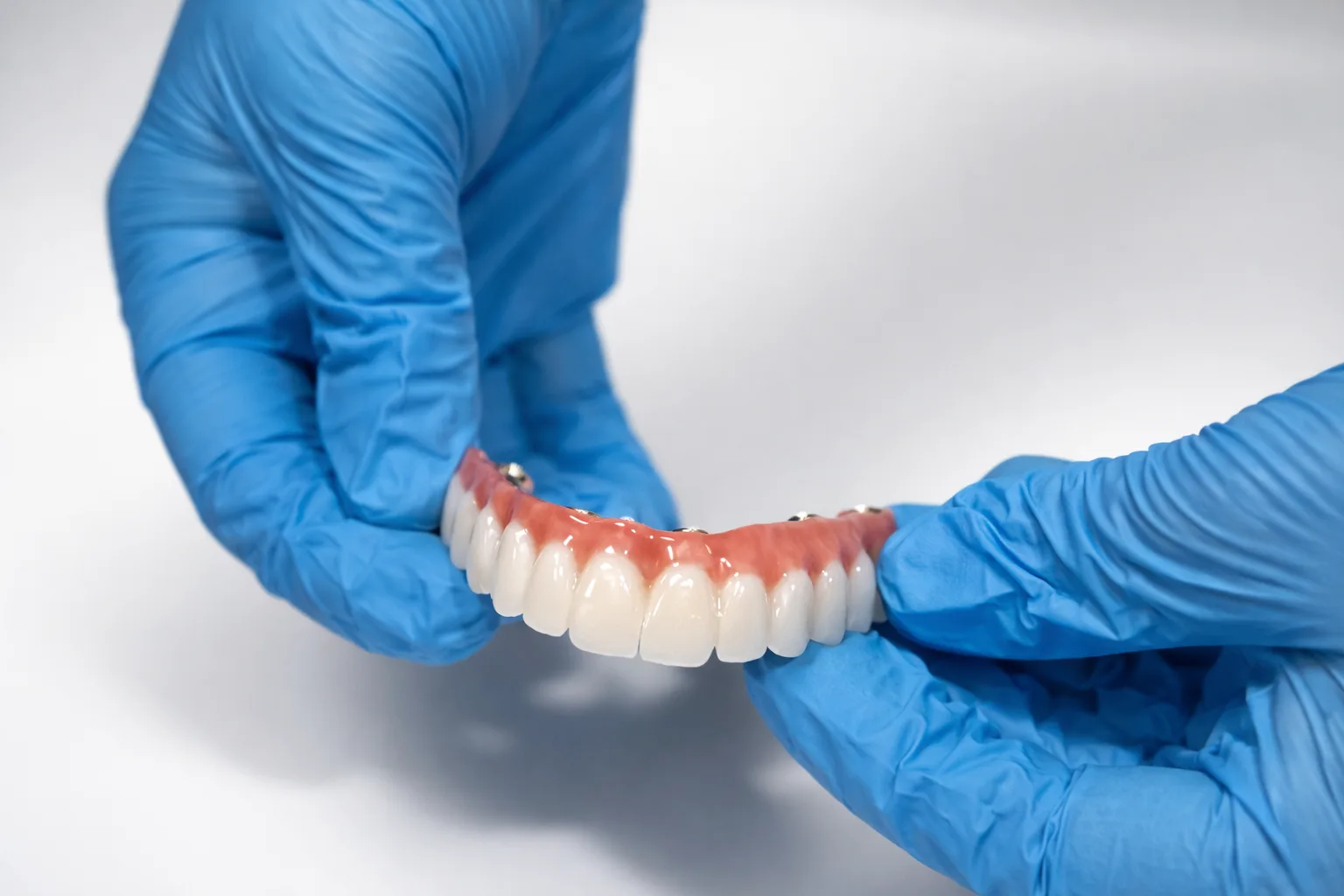
Once integration is confirmed, your custom denture is fitted with the locator housings and snapped into place. You will feel the click, test the bite, and leave with teeth that stay put.
What snap-in dentures cost here — and how to pay for them
Snap-in systems at Fusion Dental Implants start at $9,999 per arch, compared with $17,999 per arch for fixed All-on-4 and $1,850 for a single implant. Your final number depends on the implant count your anatomy needs, plus any extractions or grafting — which is why every quote follows a scan, not a phone estimate.
Two things keep the cost honest:
- Price match guarantee — bring a comparable local quote and we match it.
- Financing options — 0% plans are available, and our coordinators run your insurance benefits during the free consult so you know what your plan contributes before you decide.
Why El Dorado Hills patients choose Fusion
Specialist implant care used to mean a drive to Sacramento. Our El Dorado Hills office brings the full treatment under one roof locally: consultation, 3D imaging, surgical placement by board-certified oral surgeons, and prosthetic fittings supported by our in-house dental lab. Patients from Folsom, Cameron Park, Shingle Springs, and Placerville use the same office; our second location serves Roseville and western Placer County. If you are weighing providers, our guide on choosing a dedicated implant practice lists the questions worth asking anyone who quotes you.
Ready to stop planning your life around your dentures?
If your dentures decide what you eat and how freely you laugh, a snap-in system is the most affordable way to take that control back. Start with a free consultation and 3D CT scan at our El Dorado Hills office — you will leave knowing exactly what your jaw supports, what it costs, and what your insurance covers.
Schedule your free El Dorado Hills consultation
Why patients choose Fusion: In-House Dental Lab | Same-Day New Teeth | Transparent All-Inclusive Pricing | Lifetime Full-Arch Warranty | Price Match Guarantee
Frequently Asked Questions
How much do snap-in dentures cost in El Dorado Hills?
Snap-in denture systems at Fusion Dental Implants start at $9,999 per arch, and every treatment plan is backed by our price match guarantee. Your exact total depends on how many implants your anatomy needs, plus any extractions or grafting, which is why quotes are only given after a free consultation with a 3D CT scan.
Do you place snap-in dentures at the El Dorado Hills office?
Yes. Fusion Dental Implants has full-service offices in El Dorado Hills and Roseville. Consultations, 3D imaging, implant placement, and denture fittings for snap-in systems are all handled locally, so patients from El Dorado Hills, Folsom, and Cameron Park do not need to travel to Sacramento for specialist care.
How many implants do snap-in dentures need?
Most snap-in dentures are anchored by 2 to 4 implants per arch. The lower jaw often does well with two implants, while the upper jaw usually needs four because its bone is softer. Your 3D CT scan shows exactly how many anchors your bone can support.
Are snap-in dentures better than traditional dentures?
For most patients, yes. Snap-in dentures lock onto implants instead of relying on suction or adhesive, so they do not slip during eating or speech. The implants also stimulate the jawbone, which slows the bone loss that makes traditional dentures grow looser every year.
Can I eat normally with snap-in dentures?
Once your implants have healed, you can eat a far wider range of foods than with traditional dentures, including firmer foods that need real bite force. Very hard or sticky items should still be approached with care, but most patients return to eating comfortably in social settings.
How do I clean snap-in dentures?
You remove them nightly, brush the denture with a non-abrasive cleanser, and gently clean the locator attachments and your gums with a soft brush. This routine keeps the attachments gripping properly and protects the implants underneath.
How long does the snap-in denture process take?
Surgical healing takes about a week, but the implants need 3 to 6 months to fuse with your jawbone before the final snap-in denture is attached. You wear a temporary prosthetic during that period, so you are never without teeth.
Does insurance cover snap-in dentures in California?
Many California dental plans cover part of the denture itself, while the implant surgery is often a separate benefit. Our team runs a detailed benefits check during your free consultation and can pair any coverage with financing so the remainder fits your monthly budget.
This article is for general patient education and is not a substitute for personalized medical advice, diagnosis, or treatment. Every patient's oral health, anatomy, and healing response are different. Consult Dr. Antipov or your dental professional before making treatment decisions.
Sources: FDA: Dental Implants — What You Should Know · NIH/NIDCR: Oral Health Topics
About Fusion Dental Implants: We specialize in advanced dental implant solutions with locations in Roseville and El Dorado Hills, California.
Related reading: