
How to Find the Best Implant Specialist in Roseville: A Patient Checklist
The best dental implant specialist in Roseville for you is the clinician and team who can explain your specific diagnosis, show how the implant and final tooth will be planned together, and give you a clear written account of costs, risks, alternatives, and follow-up. No credential, technology, price, or review score alone guarantees a result.
Choosing a provider can feel especially difficult when one estimate covers only surgery while another includes a final restoration. This checklist builds on the questions Roseville patients have long asked about implant focus, 3D imaging, digital planning, transparent pricing, coordinated care, and real results. It adds a practical way to compare answers without assuming that one professional title or office model is automatically superior.
Start with the clinician, not the slogan
Verify the people who will actually treat you
Ask for the name and professional license of the clinician placing the implant and the dentist designing and delivering the restoration. In California, you can check licenses through the state licensing authority. Ask what training they have completed for your particular procedure, how often they handle cases with similar anatomy, and what they do when the initial plan changes.
Some patients with complex medical histories or extensive reconstructive needs may benefit from a referral to an oral and maxillofacial surgeon or another specialist. Others can be treated successfully by appropriately trained general dentists or other dental specialists. The useful distinction is not a blanket ranking of titles: it is whether your treating team is qualified for your case and has a plan for escalation. A board certification is worth verifying when claimed, but it is not a universal requirement for placement or proof of a complication-free outcome.
The original question list still matters: How many implants do you place? Which system do you use? Can you show relevant, consented examples? How do you manage complications? Answers should be specific rather than promises of perfection. If someone cites an exact personal success rate, ask how it was calculated, over what time period, and whether it includes challenging cases. Review patterns and recommendations can be helpful, but a testimonial does not substitute for a clinical examination.
Questions about sedation and safety
If sedation is part of your plan, ask what kind, who administers and monitors it, what permits and emergency protocols apply, and what medical information the team needs. Local anesthetic, sedation, and general anesthesia are not interchangeable. A clinician should explain how your medicines, smoking status, diabetes management, and other health factors may change the plan. The FDA's patient guide to dental implants discusses questions to consider before treatment and the importance of medical history and ongoing care.
Assess imaging, bone, and restorative planning
What a 3D scan can—and cannot—tell you
Implant placement starts with an assessment of the space, bone, gum health, and adjacent structures. Cone beam CT (CBCT) produces a three-dimensional view that can help a clinician evaluate available bone and the position of nearby anatomy. Ask whether CBCT is indicated for your case, what information it adds over other images, and who interprets it. More imaging is not an automatic badge of quality, and a scan cannot promise uncomplicated healing.
A dental implant is a support placed in the jaw. A connector called an abutment and a crown, bridge, or denture may attach to it. As the American Dental Association explains, the dental team must consider whether there is enough bone to support treatment and whether gums are healthy enough for implants. Active gum disease deserves attention before a surgical plan is finalized; the NIDCR's periodontal disease overview explains why gum and supporting-bone health matter.
Ask to see how the finished tooth influences the implant position. A post can be firmly integrated yet still create a difficult restorative problem if its location does not allow a cleanable, appropriately positioned crown. Digital planning or a surgical guide can be useful tools, but neither replaces examination, clinical judgment, or appropriate follow-up.
Ask what happens if there is not enough bone
Tooth loss and periodontal disease can affect the available foundation. Depending on the site, a clinician might discuss grafting, a different implant position, a bridge, or a removable option. None should be promised solely from a photo or a quick phone quote. If grafting is proposed, ask what material will be used, what additional healing might be needed, and whether the quoted price includes it.
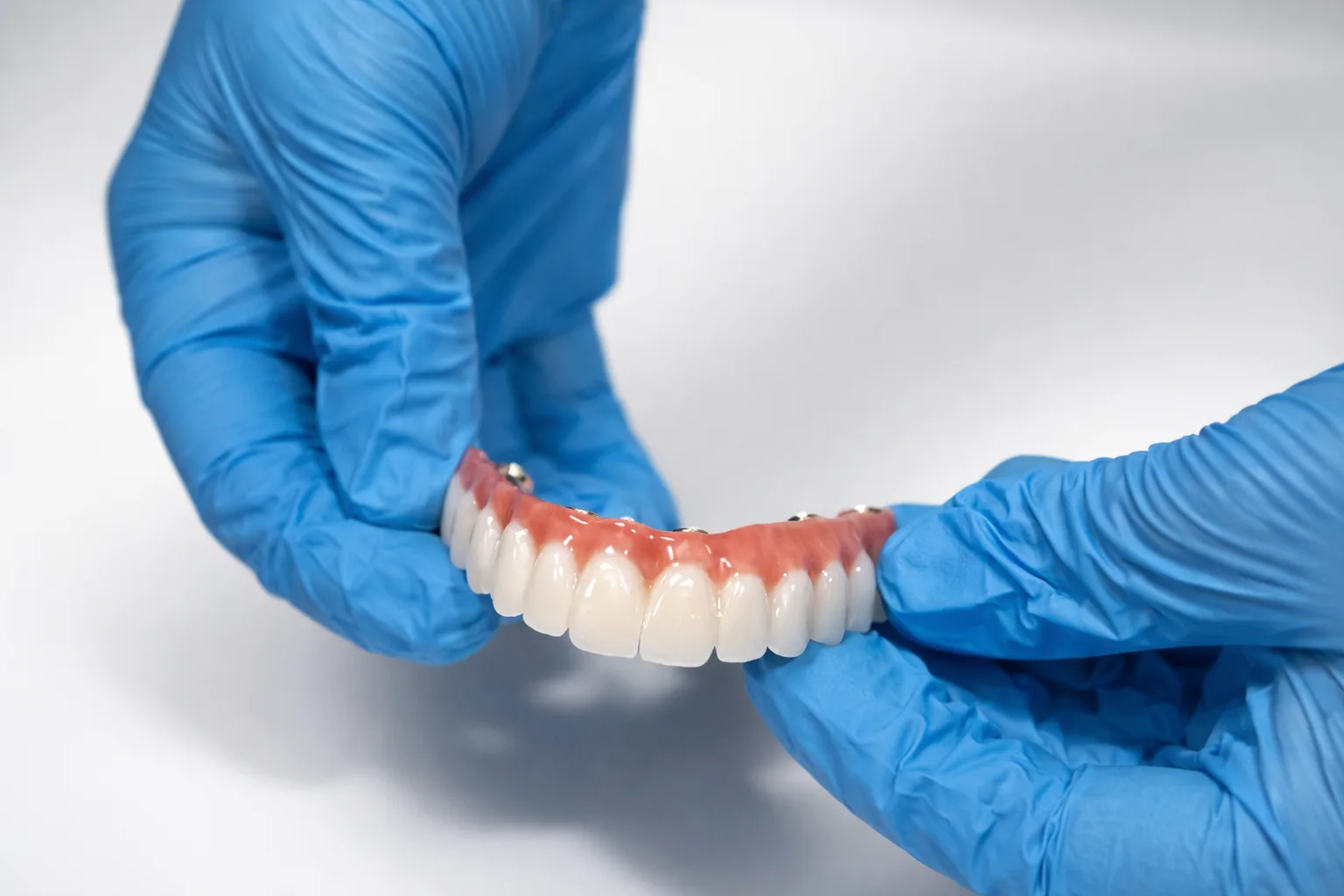
For a full arch, ask whether an immediate temporary restoration is possible and what would change that decision on surgery day. “Teeth in a day” often describes a provisional set of teeth, not the final prosthesis or the completion of healing. The timing of a final restoration varies with stability, healing, and treatment design. Our same-day implant overview explains why temporary and final teeth are different stages.
Compare coordinated care with referral-based care
Your earlier checklist asks whether surgery and restoration happen under one roof. That remains a good question, but both coordinated single-office and referral-based treatment can work well. What matters is whether everyone agrees on the final design, the schedule, and who takes responsibility if the restoration needs adjustment.
| Question to compare | Coordinated care in one practice | Separate surgical and restorative offices |
|---|---|---|
| Who designs the final tooth? | Ask how the surgical and restorative clinicians agree on the position before placement. | Ask when your restorative dentist approves the plan and how it reaches the surgeon. |
| Visits and communication | Fewer handoffs may be convenient; verify who is available at each stage. | Referrals can bring specialized perspectives; clarify who shares images and updates. |
| Laboratory work | An in-house lab may make some adjustments convenient; ask which work is actually done there. | An outside lab can also make excellent restorations when specifications and feedback are clear. |
| Billing | A single estimate can still exclude certain procedures; request an itemized scope. | Separate fees may be easier to identify, but add the entire treatment before comparing. |
| Complications or revisions | Confirm who evaluates surgical versus prosthetic problems and what is covered. | Agree in advance which office to call first and how a revision will be coordinated. |
| Temporary teeth | Ask what is provisional, when it may be attached, and what diet is required. | Temporary restorations can also be coordinated across offices; confirm scheduling early. |
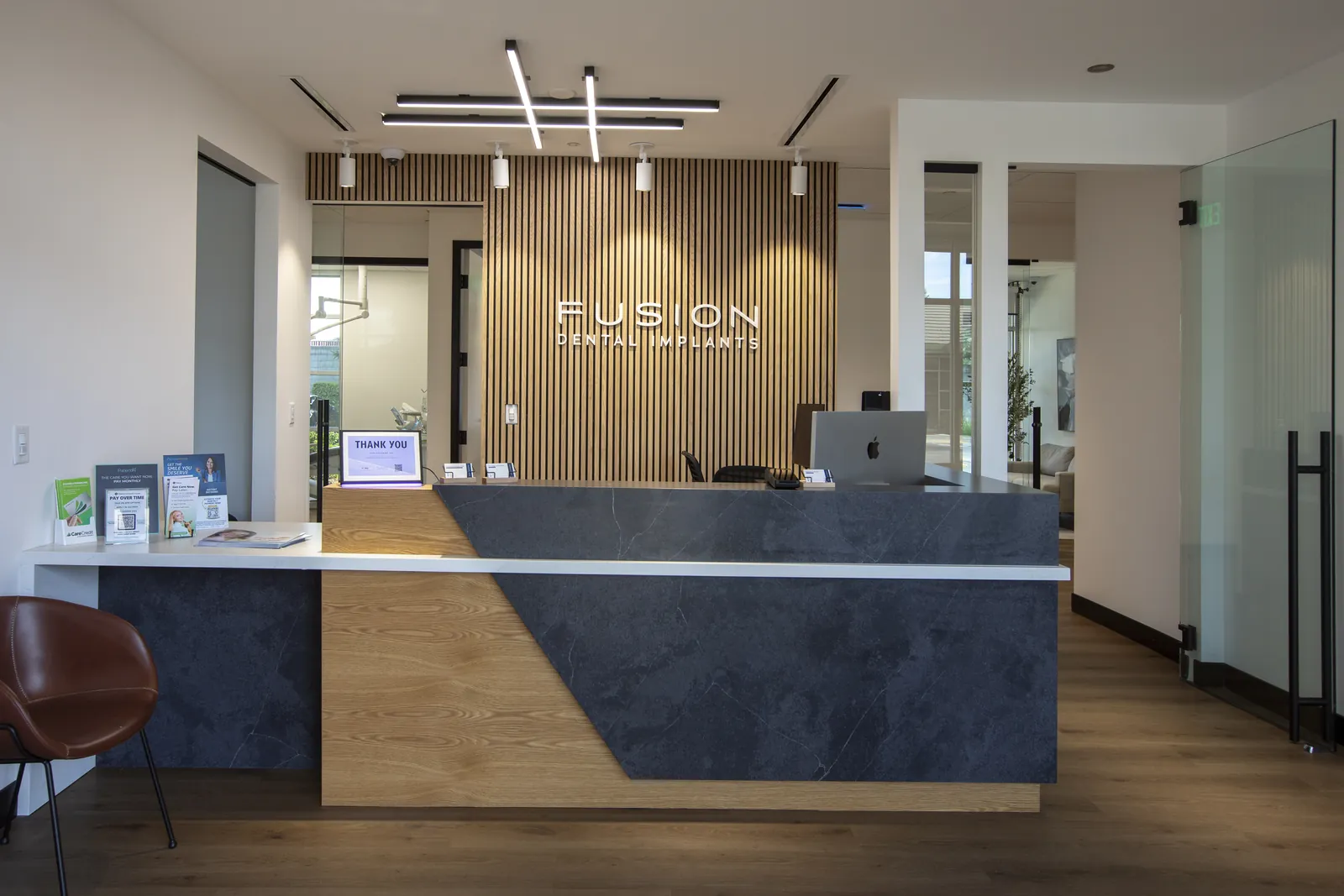
An in-house lab is a workflow choice, not a prerequisite for a well-fitting implant crown. Nor is a referral automatically a “loop” that causes problems. Ask for the handoff plan in writing. Fusion Dental Implants coordinates implant care at its Roseville location; during consultation, ask precisely which steps and laboratory services will be performed in-house for your plan.
Get a complete estimate and realistic warranty terms
An apparently low implant price might exclude the abutment, crown, imaging, surgery, or preparatory care. Conversely, a larger bundled estimate may include items you do not need. Ask for a written breakdown of diagnosis and imaging, extraction, grafting, implant placement, connector, temporary tooth, final prosthesis, sedation if applicable, and follow-up. Ask what happens if a tooth cannot be placed on the intended day. Compare the same scope of care, not just headline numbers.
Fusion advertises a single implant from $1,850 and full-arch treatment from $17,999 per arch; total cost varies with clinical needs and what your individualized plan includes. Financing may be available from $73/month for a single tooth or from $299/month for a full arch, subject to approval and terms. These starting figures are not a substitute for an itemized quote. See the financing explanation and ask about the terms of any price-match policy before assuming two quotes qualify.
Ask for warranty language, exclusions, maintenance obligations, and whether the coverage applies to the implant, prosthesis, or both. A “lifetime” phrase is not a clinical guarantee: routine wear, injury, disease, and inadequate maintenance may affect what is covered. An ethical provider should also explain the possibility of implant failure and the steps and costs of reassessment rather than promising a permanent result.
Make your Roseville consultation count
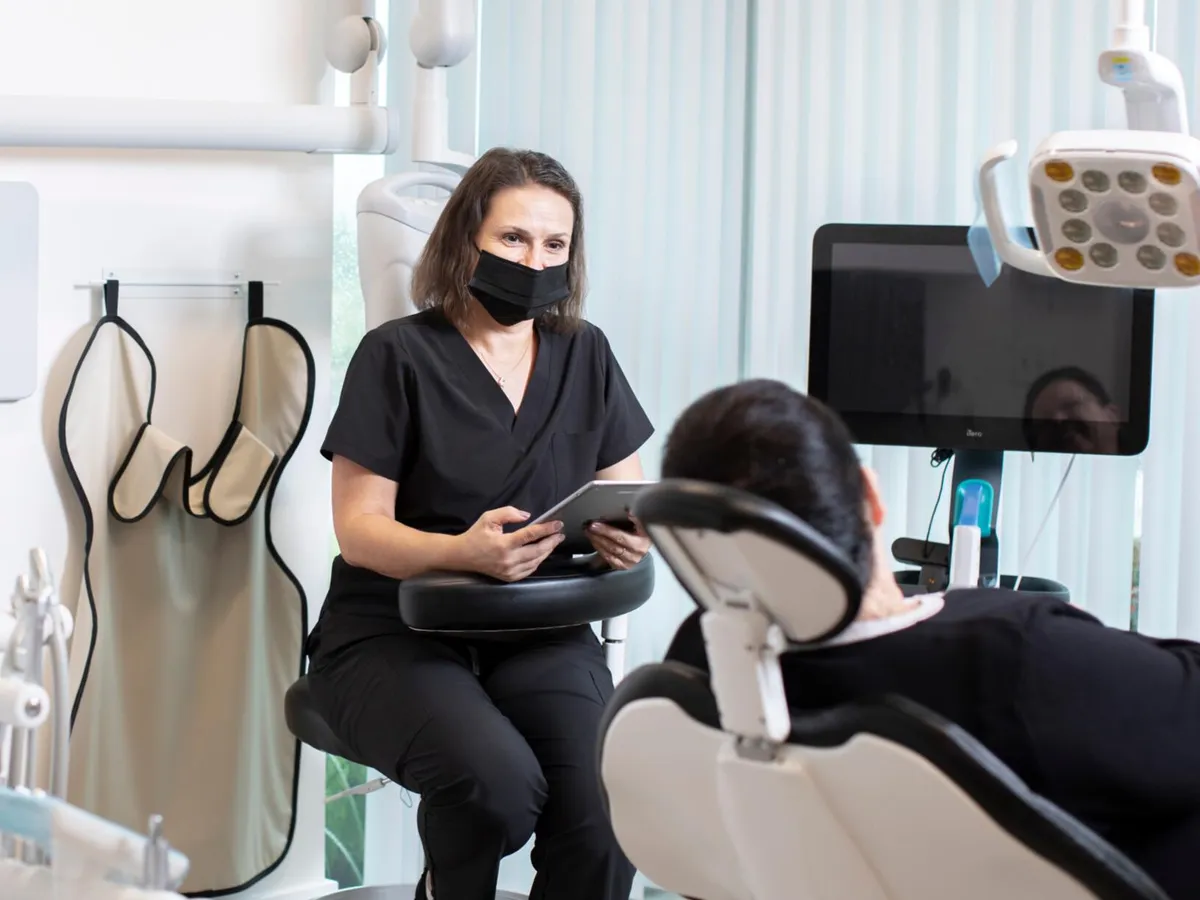
Bring a list of medicines and medical conditions, prior dental records if available, and your priorities for appearance, chewing, number of visits, and budget. Ask whether the team recommends treating gum disease or other issues first. If you are replacing one tooth, compare a single implant with a bridge and discuss what each does to neighboring teeth. If many teeth are failing, ask about full-arch options, removable implant dentures, and conventional dentures rather than assuming every person needs the same number of implants.
Request a written treatment sequence: evaluation → any needed preparatory care → implant placement → healing and temporary restoration if appropriate → final tooth → maintenance. Clarify who you will contact after hours, what routine cleaning requires, and which symptoms should prompt a call. The right choice is the team that welcomes these questions and explains why a proposed option fits your anatomy and goals, even if you choose to seek a second opinion.
Fusion Dental Implants welcomes questions at its Roseville and El Dorado Hills offices and serves patients from Rocklin, Lincoln, Granite Bay, and the greater Sacramento area. To compare options for your own case, contact the team for a consultation.
Why patients consider Fusion: Implant-focused planning | Coordinated surgical and restorative care | Written treatment estimates | Options for temporary teeth when clinically appropriate.
This article is for general patient education, not personalized medical advice, diagnosis, or treatment. Anatomy, health, risks, and healing vary. Consult a qualified dental professional about your circumstances.
About Fusion Dental Implants: We provide implant care at offices in Roseville and El Dorado Hills, California.
Related reading: Dental implant financing in California · Understanding temporary teeth · Implants versus dentures.
Frequently Asked Questions
Who is the best dental implant specialist in Roseville, CA?
There is no single best provider for everyone. Compare verified licenses, experience with cases like yours, diagnostic planning, restorative coordination, costs, and follow-up. Fusion Dental Implants has a Roseville office where you can discuss your options.
What should I look for in a dental implant provider in Roseville?
Ask who will place the implant, who will restore it, how your anatomy will be assessed, what happens if you need grafting, and how complications and maintenance are handled. Request a written plan with itemized costs.
Is Fusion Dental Implants accepting new patients in Roseville?
Contact the Roseville office to confirm current appointment availability and arrange an implant consultation. You can bring prior X-rays, a medication list, and any competing estimates for discussion.
Does Fusion Dental Implants offer consultations in Roseville?
Yes. Contact the Roseville office to discuss an implant consultation and confirm what your visit includes before you arrive. A consultation should clarify clinical options, the expected sequence of care, and estimated costs.
What implant services can I discuss at Fusion Dental Implants?
You can ask about single-tooth and multiple-tooth replacement, full-arch solutions, implant-supported dentures, and whether preparatory treatment such as extractions or bone grafting may be needed in your case.
Is a board-certified oral surgeon required for every implant?
No. Different licensed dental professionals can provide implant care within their training and scope. Ask the actual treating clinician about credentials, experience with your type of case, and who manages anesthesia and complications.
Do I need 3D imaging before implant surgery?
Imaging should be selected for your anatomy and treatment plan. A clinician may recommend cone beam CT to evaluate bone and nearby structures; ask why it is appropriate for you and whether its cost is in the estimate.
What should an implant estimate include?
Ask whether the estimate includes imaging, extractions or grafting if needed, the implant, abutment, provisional restoration, final crown or bridge, sedation if applicable, follow-ups, and any maintenance or warranty conditions.
Ready to Transform Your Smile?
Schedule your free consultation today and discover how dental implants can change your life.