
Bone Loss and Dental Implants: What to Know
Medically reviewed byDr. Alexander Antipov— 2026-07-13
Bone loss does not automatically disqualify you from dental implants. Modern techniques, including angled implant placement, full-arch solutions like All-on-4, bone grafting, and zygomatic implants for severe cases, allow specialists to build a stable foundation for most patients who were told they lack enough bone. At Fusion Dental Implants in Roseville and El Dorado Hills, a 3D scan at your consultation shows exactly which options fit your anatomy.
This article is for general information and does not replace a clinical evaluation. The right approach to bone loss depends on your imaging, health history, and goals. Consult a qualified implant surgeon for a personalized plan.
Here is how the main treatment paths compare when bone loss is a factor:
| Option | Best For | Graft Needed? | Timeline |
|---|---|---|---|
| Angled or strategic placement | Mild to moderate bone loss | Usually no | Standard implant timeline |
| Short or wide implants | Limited bone height or width | Usually no | Standard implant timeline |
| Full-arch (All-on-4) | Extensive tooth and bone loss | Often no | Teeth in a day possible |
| Bone grafting or sinus lift | Insufficient bone at implant site | Yes | Adds roughly 4 to 9 months healing |
| Zygomatic implants | Severe upper jaw bone loss | No | For select complex cases |
Why Bone Loss Matters for Implants
Bone loss is one of the most common challenges in dental implant treatment. Tooth loss initiates a cascade of bone resorption that progresses over time if untreated.
Understanding the relationship between bone and implants is essential for realistic treatment planning. Waiting for the "perfect time" usually works against you: bone loss is progressive, and conventional dentures often speed it up by pressing unevenly on the gums. The result is dentures that fit worse every year because the bone underneath keeps shrinking.
Why Bone Loss Occurs After Tooth Loss
Bone exists to support function. When a tooth root is lost:
- Mechanical stimulation disappears
- Bone remodeling shifts toward resorption
- Volume and density decrease over time
The greatest bone loss occurs within the first year after extraction.

Bone Density vs Bone Volume
Successful implants require both:
- Bone volume: enough bone height and width
- Bone density: bone strong enough to hold the implant
A patient may have sufficient volume but inadequate density, or vice versa.
Why Some Patients Are Told They Don't Have Enough Bone
If another dentist has told you that you are not a candidate, the diagnosis may say more about the imaging than about your jaw. Standard 2D X-rays show the height of the bone but hide its width and density, like judging an object by its shadow. 3D CBCT imaging creates a complete digital map of the jaw and often reveals usable pockets of bone that a flat image misses.
That difference matters. With a 3D scan, a specialist can plan implant positions in the densest available bone before surgery begins, which often reduces or eliminates the grafting a general practice would assume is necessary. Long-term clinical data supports this approach: a 20-year analysis of over 10,000 implants found high survival rates even when augmentation procedures were needed.
How Bone Loss Affects Implant Placement
Insufficient bone can lead to:
- Poor primary stability
- Improper implant positioning
- Increased failure risk
- Compromised prosthetic design
Bone loss limits implant options and increases treatment complexity.
When Bone Grafting Is Required
Bone grafting is used when existing bone cannot support implants safely.
Common grafting procedures include:
- Socket preservation
- Ridge augmentation
- Sinus augmentation
Grafting increases treatment time and cost but improves predictability in selected cases.
When Bone Grafting Can Be Avoided
In some cases, grafting can be avoided through:
- Angled implant placement
- Short or wide implants
- Full-arch techniques that use available bone strategically
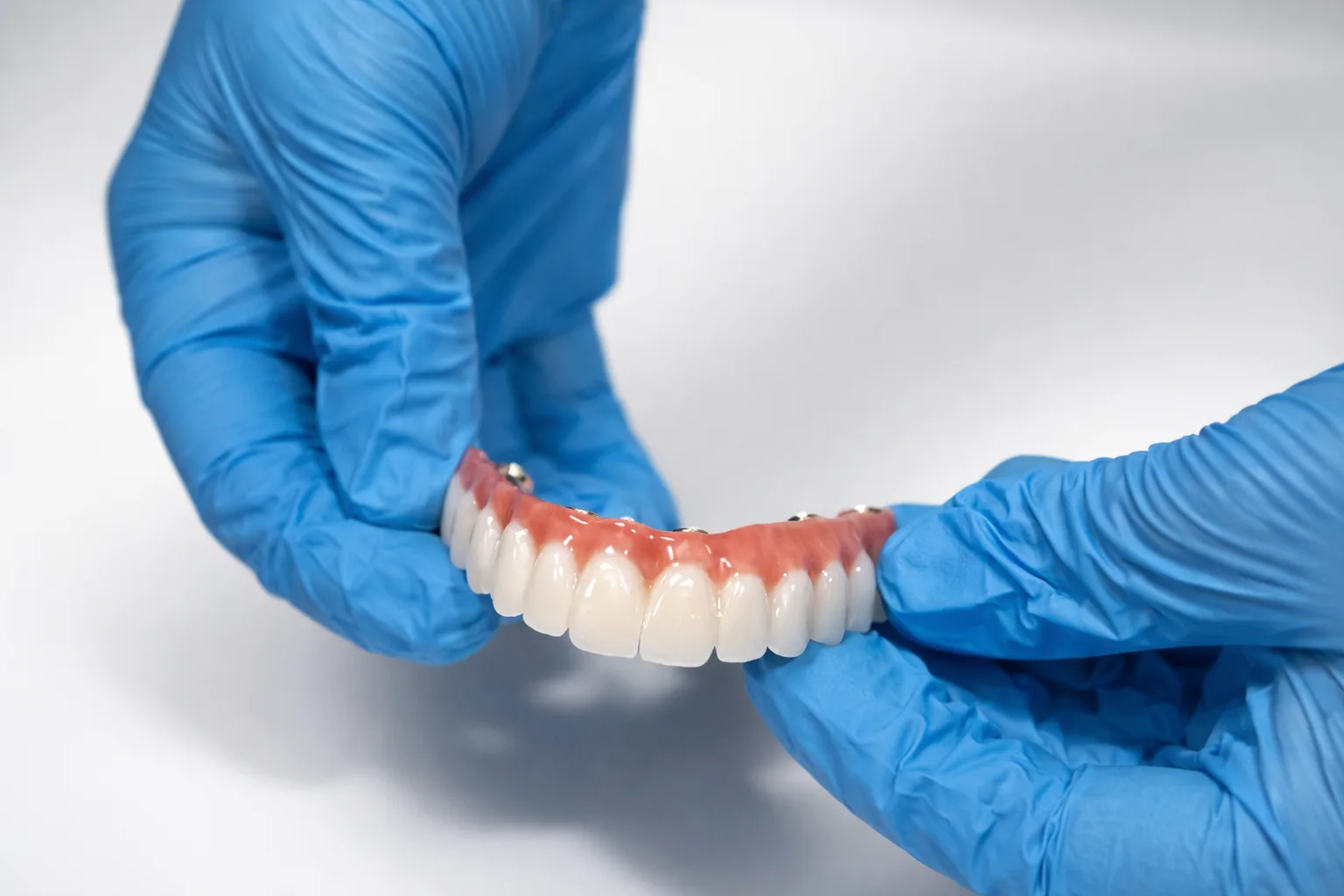
All-on-4 is the clearest example: tilting the back implants anchors them in the naturally denser bone at the front of the jaw, providing immediate stability through geometry rather than grafted volume. For severe upper jaw bone loss, zygomatic implants anchor in the cheekbone and bypass the jawbone entirely.
Avoiding grafts is not always superior; it must be biologically justified.
Risks of Ignoring Bone Loss
Placing implants in inadequate bone increases:
- Early failure risk
- Long-term bone loss
- Prosthetic complications
Bone loss should be addressed, not bypassed.

Long-Term Bone Stability
Bone stability depends on:
- Implant positioning
- Load distribution
- Oral hygiene
- Systemic health
Implants preserve bone only when properly planned and maintained.
Comprehensive Bone Assessment in Sacramento
At Fusion Dental Implants, we use advanced 3D imaging to precisely measure bone volume and density before treatment. Our specialists develop customized plans based on your unique anatomy, including complex and revision cases for patients who experienced implant failure elsewhere or were told their situation is hopeless. Every plan comes with an all-inclusive quote backed by our price match guarantee, and financing options are available.
Schedule your free consultation
Frequently Asked Questions
Can I get dental implants if I have bone loss?
In most cases, yes. Bone loss makes treatment more complex, but modern options like angled implant placement, full-arch techniques, bone grafting, and zygomatic implants mean very few patients are permanently disqualified. A 3D scan is the only way to know your real options.
Do I always need a bone graft before implants?
No. Grafting is only required when existing bone cannot support implants safely. Angled placement, short or wide implants, and full-arch techniques that use available bone strategically can often avoid grafting, but the choice must be biologically justified, not just faster.
Why did another dentist tell me I don't have enough bone?
Many general practices rely on 2D X-rays, which show bone height but hide its width and density. 3D CBCT imaging maps the entire jaw and often reveals usable bone that a flat image misses. A specialist evaluation with a 3D scan can turn a no into a yes.
What happens if a bone graft fails?
True rejection is rare because grafting materials are highly biocompatible. When a graft fails, it is usually because it did not integrate with the blood supply. The material is removed, the area heals, the cause is investigated, and the procedure can often be repeated with a modified approach.
Does All-on-4 work for patients with significant bone loss?
Often, yes. All-on-4 tilts the back implants to anchor in the naturally denser bone at the front of the jaw, which frequently provides strong stability without extensive grafting. That is why full-arch techniques are a common solution for patients told they lack bone for traditional implants.
Can smokers with bone loss still get dental implants?
Smokers can qualify, but smoking raises the risk of implant failure because nicotine restricts blood flow to the gums and bone, slowing healing. Pausing smoking for several weeks before and after surgery significantly improves the odds of successful integration.
About Fusion Dental Implants: Serving the Sacramento region, Placer County, and El Dorado County with comprehensive implant care.
Ready to Transform Your Smile?
Schedule your free consultation today and discover how dental implants can change your life.