
Dental implants can be worthwhile for older adults, but age alone does not decide the answer. What matters is whether the proposed replacement will improve daily function and comfort enough to justify the surgery, upkeep and total cost for you. A well-fitting conventional denture or a removable implant-supported denture may be the better choice for someone else. The right comparison includes your medical history, jawbone, remaining teeth, cleaning ability and priorities.
If you have grown used to avoiding certain meals or adjusting a loose denture while speaking, replacing missing teeth may have real day-to-day value. But promises of a "lifetime smile" or a guarantee of improved nutrition oversimplify the decision. This guide separates possible benefits from tradeoffs so you can decide what to ask at an evaluation in Roseville or El Dorado Hills.
What "worth it" means beyond the photograph
Some older adults want to replace one missing tooth without altering sound adjacent teeth. Others want a full arch that feels more secure than a loose denture. Still others are satisfied with a removable appliance but need it refitted. Begin by identifying the problem you hope treatment will solve: chewing, speech, irritation, the effort of cleaning, appearance or a combination.
The FDA explains that dental implants are devices placed in the jaw to support replacement teeth; they involve surgery and carry possible complications. They are not necessary for every older adult with tooth loss. Similarly, the ADA's MouthHealthy information on dentures describes a legitimate tooth-replacement option that can be adjusted, cleaned and maintained. Instead of asking whether one technology is always superior, ask how each option addresses your particular concern.
Eating with more confidence
Missing teeth or a poorly fitting denture can make certain textures difficult to manage. A stable replacement may broaden the foods a person feels comfortable eating. That does not mean an implant will restore every patient's original bite force or guarantee a better diet. Medical conditions, salivary flow, adaptation to the new teeth and the design of the restoration also affect chewing.
If food choices have narrowed, tell your clinician which foods are difficult and whether discomfort, shifting or poor bite contact is the cause. A simple denture adjustment may help in one case; an implant-supported restoration may be worth discussing in another. Ask what eating restrictions apply during healing, since a temporary bridge on newly placed implants is not permission to eat hard foods immediately.
Speech and social life
A removable upper denture may cover parts of the palate and can feel bulky; a loose appliance can move during conversation. An implant-retained denture can improve retention, while some fixed designs may leave more of the palate uncovered. Speech usually requires adjustment to any new shape in the mouth. Neither dentures nor implants provide instant, identical speech changes for all patients.
Social confidence is personal. If your current appliance is comfortable and you enjoy meals without worry, replacing it purely because implants are available may not be compelling. If it repeatedly slips and you avoid gatherings, the additional expense and visits may be worthwhile to you. A realistic treatment conversation should include both possibilities without promising an emotional transformation.
Bone, facial appearance and remaining teeth
After teeth are lost, the jaw ridge can change over time, which can affect the fit of a denture. Implants transfer forces into bone at their placement sites, but they do not completely prevent every change in the jaw or guarantee a younger-looking face. The appearance of the lips and cheeks depends on the prosthesis design, remaining bone and other individual factors.
If you still have natural teeth, preserving them whenever feasible is part of the value calculation. A single implant does not usually require preparing neighboring teeth for bridge crowns. On the other hand, a sound tooth-supported bridge may fit your needs if the neighboring teeth already need crowns. Learn more about the implant versus bridge tradeoffs.
Compare options for older adults
The following focuses on arch-level replacement. If you need only one tooth, a single crown on an implant or a bridge involves a different plan and estimate.
| Decision point | Fixed implant-supported arch | Removable implant-retained denture | Conventional removable denture |
|---|---|---|---|
| How it stays in place | Bridge fastened to implants; dentist removes it for service | Attaches to implant components; wearer removes it | Rests on gums; retention varies with fit and anatomy |
| Daily cleaning | Brush and clean beneath bridge with recommended tools | Remove and clean appliance and attachments | Remove and clean denture and underlying tissues |
| Surgery and anatomy | Requires implants and assessment of bone and health | Requires implants and adequate planning | Usually no implant surgery |
| Adjustments over time | Bridge or components can need professional maintenance | Attachment parts and denture may need service | Relines, adjustments or eventual replacement may be needed |
| Eating during healing | A temporary bridge, if provided, has diet restrictions | Healing and attachment schedules vary | Often usable without implant integration period |
| Potential advantage | Fixed teeth without removing the arch daily | More retention than an unsupported denture while remaining removable | No implant surgery and generally a lower initial investment |
| Important limitation | Higher complexity, cleaning access and potential cost | Still must be removed and maintained | Fit or stability may be difficult for some people |
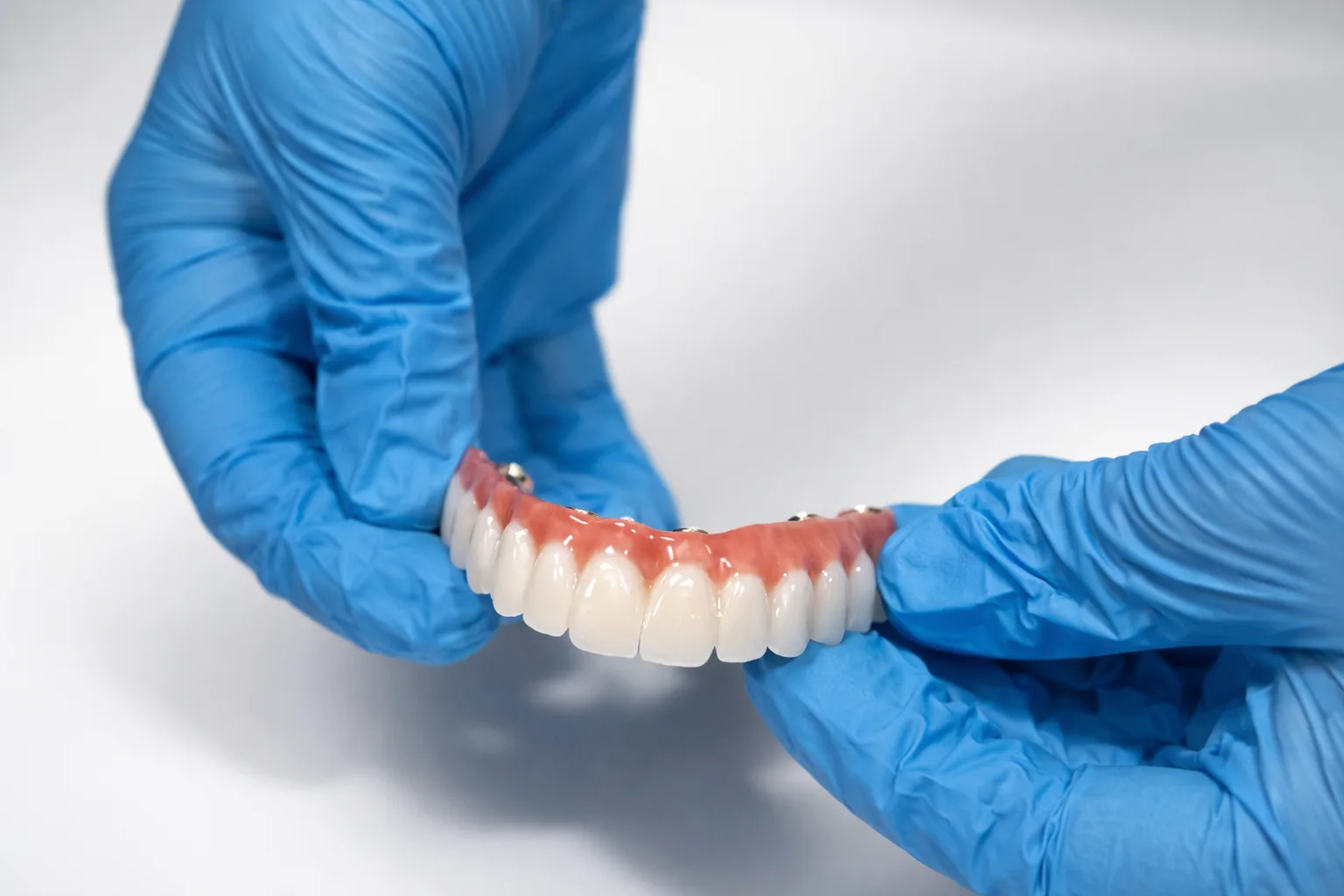
A snap-in denture is not the same as a fixed arch. It attaches to implants for retention but is removed by the wearer for cleaning. For someone who prefers taking a prosthesis out to clean it, this can be an advantage rather than a compromise. For someone who strongly prefers fixed teeth, the need to remove it may be a decisive disadvantage. Our All-on-4 overview describes one fixed arch concept; the number and placement of implants should be chosen for the patient's anatomy, not from a slogan.
Am I too old, or is my health the real concern?
There is no universal upper age limit that rules out implant care. A clinician considers whether the surgery and long-term maintenance fit your overall health and goals. Some older adults are medically fit for treatment; younger adults can have conditions that complicate healing. A good evaluation considers the whole person rather than only a birth date.
Diabetes, gum disease and tobacco
Diabetes management, periodontal health and tobacco use affect the conversation about healing and maintenance. They are not all-or-nothing labels. The team may want disease controlled, additional monitoring or coordination with your physician before moving ahead. If your teeth were lost to periodontal disease, an implant will also need careful cleaning and professional reviews. The NIDCR's guide to gum disease explains how inflammation can affect teeth and supporting bone; our periodontal disease and implants guide discusses implant planning afterward.
Do not conceal smoking, medications or a recent change in blood sugar control out of fear of being turned down. Those details help clinicians plan safely, and they may affect whether a bridge or denture would be more suitable.
Osteoporosis and bone-modifying medications
Osteoporosis is not identical to insufficient jawbone at a particular implant site. An examination and imaging help assess the site itself. Bone-modifying medications, including some taken for osteoporosis or cancer, require particular attention because certain patients face a risk of jaw complications after invasive dental treatment. The medication, dose, route and reason for taking it all matter. Blood thinners likewise need review because they can affect bleeding management.
Bring a complete medication list, including supplements. Do not stop a blood thinner or osteoporosis medication without advice from the prescribing clinician. Your dentist may contact that clinician if a change to planning is needed. If you have been told you have "no bone," ask which locations were examined, whether bone grafting is feasible and what non-surgical alternatives remain.
Dexterity and care support
Daily cleaning is not optional for fixed implant restorations. Under a full-arch bridge, food debris can accumulate in areas that require a specific brush, floss threader or other aid. A removable appliance may be easier for some people to inspect and clean; another patient might find its attachments hard to manage. Arthritis, vision changes or a caregiver's availability should be openly discussed, not treated as an afterthought.
Ask the team to demonstrate the actual cleaning routine for each proposed option. If the recommended tools will be difficult to use, say so before choosing. The best restoration is one you can realistically maintain.
From consultation to final teeth
The path at a glance: Health review → Imaging and options → Preparatory care → Implant placement when appropriate → Healing and temporary teeth → Final restoration and ongoing care
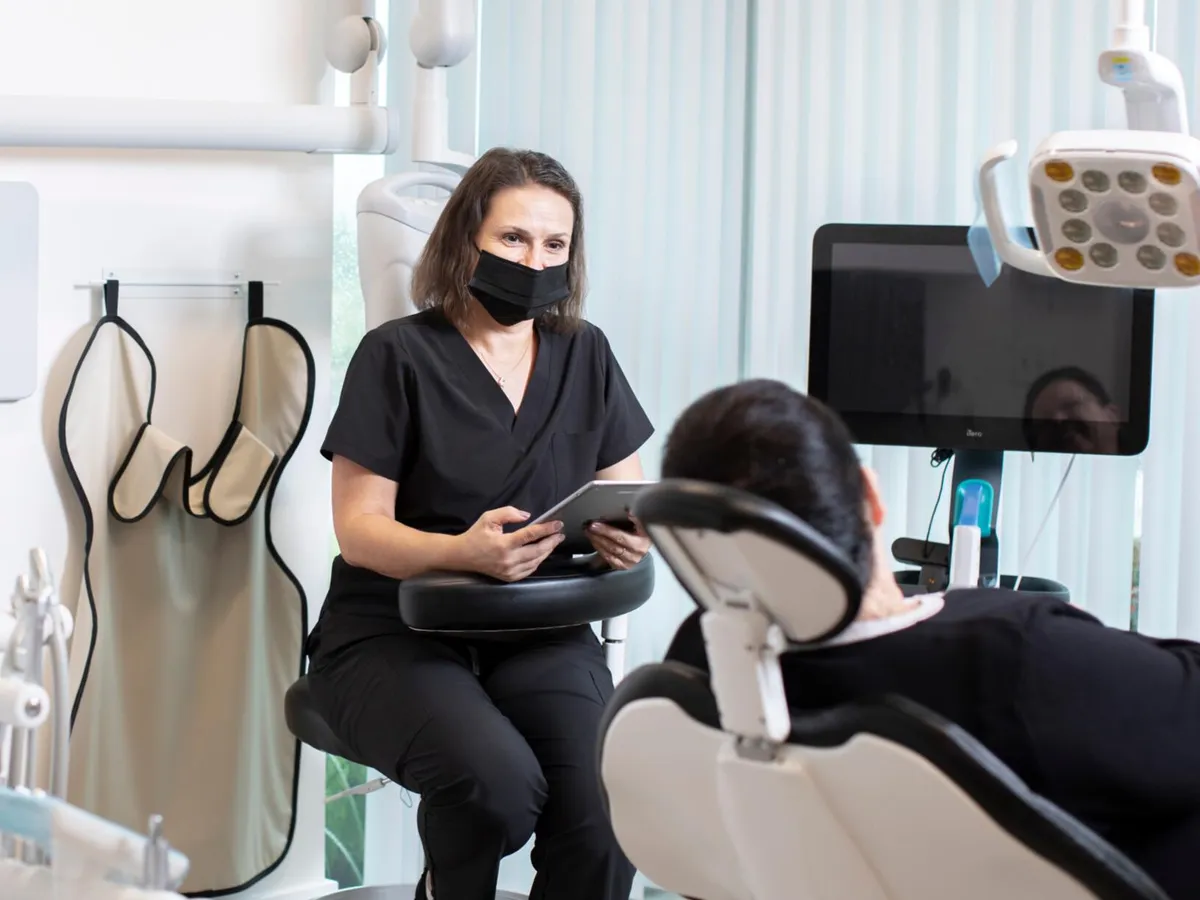
At a consultation, expect questions about medical diagnoses, medicines, the current denture or teeth, and what you hope to change. Examination and imaging help assess gum health and jawbone. If remaining teeth can be kept, ask for their prognosis. If extractions are recommended, ask why and whether a less extensive plan could meet your goals.
Your treatment may include gum care, extractions or grafting before implant placement. Some patients can receive temporary teeth on the day implants are placed; others require a different provisional option. Temporary teeth are not the final prosthesis. During healing, the dental team may recommend a modified diet to protect the implants. Bone integration and fabrication of the final teeth are separate from the first days of soft-tissue recovery.
Discuss anesthesia options in light of your medical history and arrange help with transport if your planned sedation requires it. Ask for written instructions on medicines, diet and whom to call with unexpected bleeding, worsening swelling or a loose provisional. Recovery differs with procedure complexity; "back to normal in two days" is not a promise anyone can make responsibly for every senior.
If your concern is mainly a poorly fitting current denture, ask whether a reline or replacement denture might help without implant surgery. If you choose implants, ask how many visits the entire sequence may require, which office will handle follow-up, and how the restorative dentist and surgical team coordinate.
The money and coverage question
For an older adult on a fixed income, value is not just initial price. Consider possible adjustments, repairs, transportation to appointments, cleaning supplies, and whether the restoration matches how you want to live. But do not assume that denture upkeep inevitably exceeds implant cost or that an implant has no future expenses. Compare written treatment plans over a realistic horizon without pretending future repairs can be predicted exactly.
At Fusion, a single implant starts from $1,850, and full-arch treatment starts from $17,999 per arch. They are different treatments, not a combined price. The total varies with anatomy, preparation and the restoration selected. Financing starts from $73/month for a single tooth and $299/month for a full arch, subject to approval and terms. Our financing information and price-match details can help frame questions for an estimate.
Original Medicare generally does not cover routine dental implants. Medicare Advantage dental benefits vary by plan and may have restrictions, annual limits and exclusions. Supplemental dental plans differ too. Ask your insurer to review specific procedure codes and an itemized estimate instead of relying on a broad statement that implants are "covered." The office can help explain the estimate, but your insurer determines the benefit.
If you are comparing a fixed arch with a snap-in denture, clarify whether prices include imaging, extractions, provisional teeth, the final prosthesis and later maintenance. A comparison is meaningful only when both estimates cover equivalent stages. Also ask what happens if you decide not to proceed after the diagnostic visit.
Frequently Asked Questions
Does Medicare cover dental implants for seniors?
Original Medicare generally does not cover routine dental implants. Some Medicare Advantage plans include dental benefits, but limits and covered procedures vary. Check your plan's written benefits and request an itemized estimate.
Is dental implant treatment painful for older adults?
Local anesthesia is used during placement, and soreness or swelling may follow surgery. Comfort options and recovery vary with health and procedure complexity; ask your clinician for a personalized aftercare plan.
How long can an implant last for someone in their 70s?
There is no guaranteed lifespan. The implant, crown or bridge may need maintenance or repair over time. Long-term care and the health of the surrounding tissues matter more than age alone.
Can seniors with bone loss still get implants?
Some can. Imaging helps determine whether a graft, an alternative implant plan or a non-implant replacement is appropriate. Bone loss should be evaluated at the specific proposed sites.
What if I have osteoporosis or take blood thinners?
Neither fact alone provides a complete answer. Share all medications and diagnoses with the dental team; they may coordinate with your physician. Do not stop prescribed medication without medical advice.
How do fixed full-arch implants differ from dentures?
A fixed full-arch bridge attaches to implants and is removed by a dental professional; a conventional denture rests on the gums and is removed by the wearer. Both require cleaning and follow-up.
How long is recovery after implant surgery for a senior?
Initial soreness and soft-tissue healing differ from the longer period needed for bone integration. Extractions, grafting and medical factors can change the schedule. Your team should explain each stage.
What is the best tooth replacement option for an older adult?
It depends on remaining teeth, bone, dexterity, health, preferences and finances. A single implant, fixed arch, snap-in denture or conventional denture can each be appropriate in different circumstances.
Decide what is valuable to you
Implants may be worth considering if the current replacement repeatedly interferes with meals, conversation or comfort and your health supports the proposed treatment. A well-fitting removable option can be worth keeping too. Schedule a consultation to discuss your priorities, health history and a realistic written plan. Fusion Dental Implants has offices in Roseville and El Dorado Hills and welcomes patients from the greater Sacramento area.
Why patients choose Fusion: In-House Dental Lab | Same-Day New Teeth When Clinically Appropriate | Transparent Treatment Estimates | Full-Arch Warranty Terms Available | Price Match Guarantee
This article is for general patient education and is not a substitute for personalized medical advice, diagnosis, or treatment. Every patient's oral health, anatomy, and healing response are different. Consult your dental professional before making treatment decisions.
About Fusion Dental Implants: We provide dental implant care at offices in Roseville and El Dorado Hills, California.
Related reading
Ready to Transform Your Smile?
Schedule your free consultation today and discover how dental implants can change your life.